

The Adult Attachment Interview and Attachment Theory in Therapist Training
Attachment and Therapy
One of the three pillars of Somatic Attachment Psychotherapy 2-year Training, and all of Bringing the Body into Practice’s clinical offerings, is the articulation and application of attachment theory, and modern attachment theory, to clinical practice. Understanding attachment and applying the theory to clinical practice is imperative for the practice of psychotherapy, as early relational experiences establish the neurophysiological and psychological template of self which typically play out across the lifespan, for better or for worse. *Note, the bolded text in the blog will link you to the content.
The Adult Attachment Interview Training
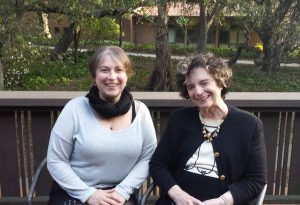 The Adult Attachment Interview remains the gold standard of attachment assessment and has specific use for therapists understanding and applying attachment theory into clinical practice. Stacy and I had the privilege of training in the Adult Attachment Interview training with Dr. Mary Main and Dr. Erik Hesse in 2015. It was this training that sophisticated and nuanced our understanding of attachment classifications, which we have then translated to clinical understanding and application to clinical practice, and teach in the Somatic Attachment Psychotherapy 2-year Training.
There’s so much more to say here, but in a nutshell, clinicians and the general public are misled to believe that self-report or cognitive tests can accurately offer information to assess attachment states. One of the brilliant aspects of the Adult Attachment Interview is that it surprises the unconscious which is necessary to elicit and showcase attachment states which are housed in the implicit and unconscious, and therefore often out awareness. This understanding is paramount to understanding how attachment wiring is out of awareness and implicitly wired in the self, which calls for right brain therapy to attend to and facilitate change. For a little more info on the AAI, here’s a link to Dr. Miriam Steele speaking about the Adult Attachment Interview – it’s good but brief.
Attachment Theory
John Bowlby, more than 50 years ago, proposed attachment theory as a radical departure from current thinking of his day where psychoanalysts understood patient issues as arising from disturbances of internal drives. Bowlby, asserted that it was the relational bonds with the attachment figure that are the basis of the infant’s survival, whereby the attachment figure is the safe haven and a secure base from which the infant can explore. Bowlby went on to assert that it was through these early caregiving interactions that people developed internal working models, so ideas, both consciously and unconsciously held, about how one feels about themselves, how one understands relationships to work, and how one feels about the world/people (safe/dangerous). Attachment Theory teaches us that these early learnings and understandings of self and relational dynamics stay with us across the lifespan, for better or for worse. This theory was cornerstone in the emergence of attachment related therapies and relational psychoanalysis which are cornerstone to Somatic Attachment Psychotherapy.
 Emerging from attachment theory and application to clinical practice, Selma Fraiberg, Edna Adelson, and Vivian Shapiro (1975) wrote the groundbreaking article, Ghosts in the Nursery: A psychoanalytic approach to the problems of impaired infant-mother relationships. This classic paper is at the bedrock of the field of infant mental health and articulated findings from their caregiver infant therapeutic work, speaking to the intergenerational transmission of trauma passed from one generation to the next through the attachment relationship, and operating outside of conscious awareness. Like Fraiberg and her colleagues, Drs. Stephen Mitchell and Jay Greenberg understood that disrupted and distorted relationships (attachment) were at the heart of the patient’s distress, and published another seminal work (1983), Object Relations in Psychoanalytic Theory, that was instrumental in bringing the relational, interpersonal psychoanalytic approach to, and beyond, the psychoanalytic world. (Incidentally, it was relational and interpersonal psychoanalysis that legitimized Ferenczi’s (1873 – 1933) work).
Modern Attachment Theory

In addition to the Adult Attachment Interview training (AAI), Stacy and I both spent many years in Dr. Allan Schore’s Seattle-Vancouver Study Group. This immersion into diverse and varied components of Dr. Schore’s thinking was sophisticated and stretched our scientific minds and clinical work. Schore has been called the “American Bowlby” and has tirelessly championed clinical practice, with the support of neuroscience, to move our understanding to a two-person, relational view of therapy. With his wife Judith Schore, they have articulated a Modern Attachment Theory (2007) – link to original article here.
Modern Attachment Theory is rooted in neuroscience (developmental, affective, and social), and articulates and evidences an early right brain, implicit, non-verbal model of attachment, housed in the unconscious. It is grounded in regulation theory and centres emotion and the regulation of affect at the heart of therapeutic change and practice. This modernization of attachment theory calls for clinicians to attend to attachment injuries via right brain to right brain, body to body therapeutic connection in contrast to left brain, verbal, cognitive ways of working, and is the bedrock of Somatic Attachment Psychotherapy.
Somatic Attachment Psychotherapy Training
 As a therapist educator I have a particular drive to support therapists to translate attachment theory, specifically modern attachment theory, into clinical practice. When we delve into attachment research and literature we find a range from simple to complex. As therapists, we need to have a complex and nuanced understanding not only of attachment theory and attachment assessment, but most importantly, therapists must be able to recognize and work with attachment injuries in the everyday content of clinical practice. Attachment injuries are present across multiple, perhaps most, presenting issues that bring people to therapy, and therapists need to work with both the explicit and implicit knowing or wiring of attachment in and of the self.
Clinicians need a complex and nuanced understanding of attachment: how it was formed; how it is maintained; how it continues to support or interrupt healthy relational functioning; how different dynamics of relating interface with each other, and; how to facilitate not only shifting of the patterning, but how to bring the out of awareness relational dynamics into awareness, so the patient increases their own awareness and understanding of the dynamics and profound, repetitive impact to their life.
Our attachment training is about increasing therapist’s capacity to listen for, recognize, and work with the sophisticated and subtle dynamics inherent in the formation of attachment, particularly insecure attachment, that happen out of awareness and in the everyday dynamics or relational field of a person’s relational life. It teaches up how to listen for the relational patterning both intra and inter personally that support or impede healthy functioning, and then work with it within the clinical relationship from a right brain stance to attend to the implicit, non-verbal, bodily based information and processing. Further, we will explore how therapists understand their own histories and attachment patterning and how it interfaces with their therapeutic practice.
Working clinically through an embodied attachment lens that holds affect regulation and relational process at its heart, is demanding, and rewarding. If this has piqued your interest, this is our expertise, come and train with us. Email us at – trainings (at) bringingthebody.ca